
TAMAR
TAMAR
TAMAR is a smart SaaS system for predicting schedule disruptions in large transit fleets. The platform helps operators detect issues and deploy solutions in real time—before small delays become costly problems.
Client
ISR Tech
Year
2024
Category
SaaS

Challenge
Challenge
Fleet delays in Israel cost companies millions in fines each month. Until now, there were no tools that gave expert dispatchers the clarity or control they needed. ISR Tech saw an opportunity to turn predictive algorithms into an innovative real-time decision-making tool.
Fleet delays in Israel cost companies millions in fines each month. Until now, there were no tools that gave expert dispatchers the clarity or control they needed. ISR Tech saw an opportunity to turn predictive algorithms into an innovative real-time decision-making tool.
Challenge
Fleet delays in Israel cost companies millions in fines each month. Until now, there were no tools that gave expert dispatchers the clarity or control they needed. ISR Tech saw an opportunity to turn predictive algorithms into an innovative real-time decision-making tool.
Solution
Solution
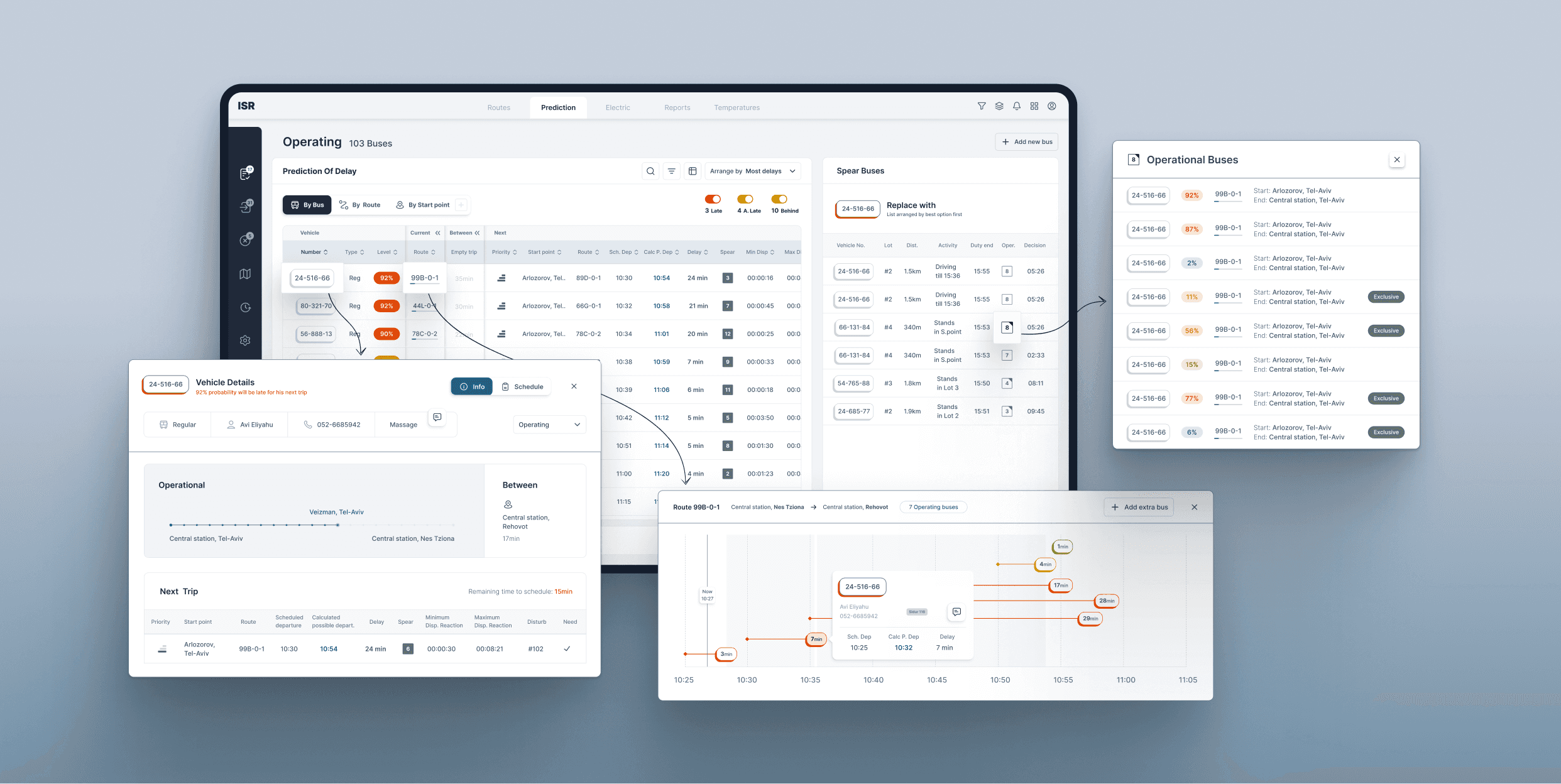
I led the product design for this system, transforming a raw engineering model into a professional tool that helps operators:
See fleet-wide or per-route delays in real-time
View recommended bus swaps based on availability, distance, and cost
Adjust views, filter data, explore route-specific timelines, and monitor disruptions on a real-time map
We built a design system, ran usability testing, and restructured the UI based on feedback to give professionals full confidence and flexibility.
I led the product design for this system, transforming a raw engineering model into a professional tool that helps operators:
See fleet-wide or per-route delays in real-time
View recommended bus swaps based on availability, distance, and cost
Adjust views, filter data, explore route-specific timelines, and monitor disruptions on a real-time map
We built a design system, ran usability testing, and restructured the UI based on feedback to give professionals full confidence and flexibility.
Solution
I led the product design for this system, transforming a raw engineering model into a professional tool that helps operators:
See fleet-wide or per-route delays in real-time
View recommended bus swaps based on availability, distance, and cost
Adjust views, filter data, explore route-specific timelines, and monitor disruptions on a real-time map
We built a design system, ran usability testing, and restructured the UI based on feedback to give professionals full confidence and flexibility.
Outcome
Outcome
TAMAR is now in beta at two major transit control centers, where experienced dispatchers use it daily. They also asked for small changes to fit their own ways of working. After a short time, both teams saw smoother operations, better decisions, and fewer fines from the Transportation Office.
TAMAR is now in beta at two major transit control centers, where experienced dispatchers use it daily. They also asked for small changes to fit their own ways of working. After a short time, both teams saw smoother operations, better decisions, and fewer fines from the Transportation Office.
Outcome
TAMAR is now in beta at two major transit control centers, where experienced dispatchers use it daily. They also asked for small changes to fit their own ways of working. After a short time, both teams saw smoother operations, better decisions, and fewer fines from the Transportation Office.

Design Story
Design Story
The big question: who makes the decisions—AI or the expert?
The big question: who makes the decisions—AI or the expert?
The engineers believed the system should act automatically: detect a delay, find a spare bus, and notify the operator. But the actual users who are experienced fleet managers, wanted control. We agreed: the system should recommend, but the operator should decide.
The engineers believed the system should act automatically: detect a delay, find a spare bus, and notify the operator. But the actual users who are experienced fleet managers, wanted control. We agreed: the system should recommend, but the operator should decide.
The big question: who makes the decisions—AI or the expert?
The engineers believed the system should act automatically: detect a delay, find a spare bus, and notify the operator. But the actual users who are experienced fleet managers, wanted control. We agreed: the system should recommend, but the operator should decide.
Designing with respect for expertise
Designing with respect for expertise
Instead of just showing the big picture, we gave users the tools to dig deep. They could filter, search, reorder columns, and see timelines that showed the previous, current, and next trip. A visual popup added another layer of clarity. Once the system felt truly usable, we moved to field testing.
Instead of just showing the big picture, we gave users the tools to dig deep. They could filter, search, reorder columns, and see timelines that showed the previous, current, and next trip. A visual popup added another layer of clarity. Once the system felt truly usable, we moved to field testing.
Designing with respect for expertise
Instead of just showing the big picture, we gave users the tools to dig deep. They could filter, search, reorder columns, and see timelines that showed the previous, current, and next trip. A visual popup added another layer of clarity. Once the system felt truly usable, we moved to field testing.
A missing piece from real life
A missing piece from real life
During testing, we discovered a gap: operators relied heavily on WhatsApp messages from drivers—updates, requests, even personal favors. This informal communication had a real impact on their decisions, yet wasn’t reflected anywhere in the system.
During testing, we discovered a gap: operators relied heavily on WhatsApp messages from drivers—updates, requests, even personal favors. This informal communication had a real impact on their decisions, yet wasn’t reflected anywhere in the system.
A missing piece from real life
During testing, we discovered a gap: operators relied heavily on WhatsApp messages from drivers—updates, requests, even personal favors. This informal communication had a real impact on their decisions, yet wasn’t reflected anywhere in the system.
Takeaways
Takeaways
Designing for experts means recognizing that their experience can be just as important as data. This project helped me see how important it is to not only design for users, but also to respect their professional know-how and working style. That was a key understanding for this project—and it really made the difference.
Collaborating with engineers, developers, and the CEO taught me how to bring together technical thinking and user needs into one focused, usable product
Designing for experts means recognizing that their experience can be just as important as data. This project helped me see how important it is to not only design for users, but also to respect their professional know-how and working style. That was a key understanding for this project—and it really made the difference.
Collaborating with engineers, developers, and the CEO taught me how to bring together technical thinking and user needs into one focused, usable product
Takeaways
Designing for experts means recognizing that their experience can be just as important as data. This project helped me see how important it is to not only design for users, but also to respect their professional know-how and working style. That was a key understanding for this project—and it really made the difference.
Collaborating with engineers, developers, and the CEO taught me how to bring together technical thinking and user needs into one focused, usable product
More Works More Works
More Works More Works

Designing a B2C mobility app for a transit tech company
Designed ISR’s first B2C app, turning backend strengths into a rider-first experience with business impact.
2024
2024
Designing a B2C mobility app for a transit tech company
Designed ISR’s first B2C app, turning backend strengths into a rider-first experience with business impact.
2024
2024
Designing a B2C mobility app for a transit tech company
Designed ISR’s first B2C app, turning backend strengths into a rider-first experience with business impact.
2024
2024

Leading end-to-end product design for a new gamified rewards platform
Crafted mobile-first UX and playful flows that turned complex reward rules into a smooth experience.
2025
2025
Leading end-to-end product design for a new gamified rewards platform
Crafted mobile-first UX and playful flows that turned complex reward rules into a smooth experience.
2025
2025
© 2025 EW
Go Back To Top
© 2025 EW
Go Back To Top